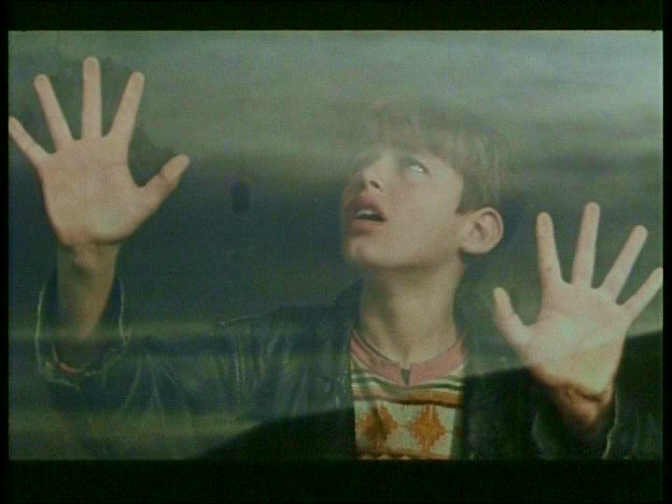
τι μπορει να κανει καποιος μονο με ενα παιδι, ενα τζαμι και τον αερα..
ενα μικρο αριστουργημα στο πνευμα του Bresson.
http://www.theguardian.com/film/video/2014/apr/10/willow-wind-film-you-should-watch-video
Willow and Wind | Iran,
D. Mohammad Ali Talebi
A school window is broken, and kids can’t concentrate because the rain is getting in. The culprit isn’t allowed back into class until he mends it. So he carries a large pane of glass by hand across the countryside in a gale. The wind blows; but will he crack? In the hands of writer Abbas Kiarostami and director Mohammad Ali Talebi, this simplest of stories becomes an epic quest, poetic and breathtakingly beautiful. It has big-hearted humanism, but Hitchcockian tension too. An edge-of-seat masterpiece. Unmissable.
Watch on Filmhouse Player
RecommendationsJust watched Willow And Wind, part of the @markcousinsfilmβChildren and Filmβ season: what a deeply strange, remarkable film
β Peter Bradshaw (@PeterBradshaw1) March 26, 2014
A beautiful, compelling, mesmerising poetic metaphor for a country’s strength and resistance Talebi’s WILLOW AND WIND (1999)
Featured article: Ehsan Khoshbakht on Willow and Wind
Moving | Japan, D. Shinji Somai
Ohikkoshi 1993. With Tomoka Tabata. 124 mins. Cert. PG.
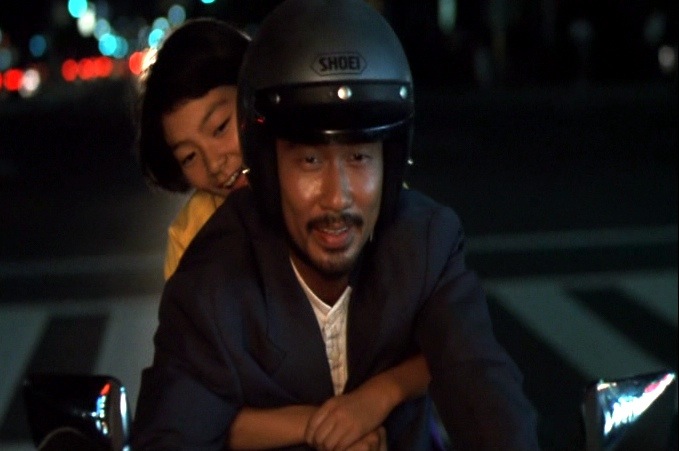
Renko’s mum and dad are splitting up, and her heart is burning. So she plays with fire, tears up the rule book, holds herself hostage, even starts talking to the weird girl in school who’s the only other one with divorced parents. But as Renko watches her childhood go up in flames, she learns how to forge a new self from the embers. Director Shinji Somai is hugely regarded in Japan, but only starting to be known in the West, more than a decade after his death. Formally surprising and emotionally thrilling, Moving is the work of a remarkable filmmaker at the height of his powers.
I was compelled to see Moving by Mark’s short trailer, a clip of Renko, the young ‛protagonist’ of the film, running full pelt down the road, chasing the car that’s taking her father away from her family. Judging by previous depictions of parental divorce, I was expecting the film to contain over-blown emotions or saccharine moments, but Renko’s performance is so singular and accurate. She is a mass of contradictions, feeling vastly contrasting things almost at once. She is self-sufficient but unable to deal with the family rupture. She’s angry but laughs in almost every scene. She’s spiteful, unfeeling and disrespectful of authority, but full of energy, wit and wisdom. She is a child, on the verge of puberty, defiantly herself; detached and demanding. The film is worth watching for the cinematography and styling alone, the colours and quality of the film are still with me. The uncomfortable depiction of a failed marriage is also visceral β the economy of words used to deflate. But these elements are entirely secondary to Renko who dictates the film’s narrative with her schemes and unpredictable behaviour.
Αριστουργημα κοντα στο πνευμα των μεγαλων Υι Υι και Still Walking.