Κάποιος μάζεψε ΟΛΕΣ τις εκδόσεις του
Kind of Blue:
http://www.kind-of-blue.de/seiten/boxen/miles_kob_box.htm
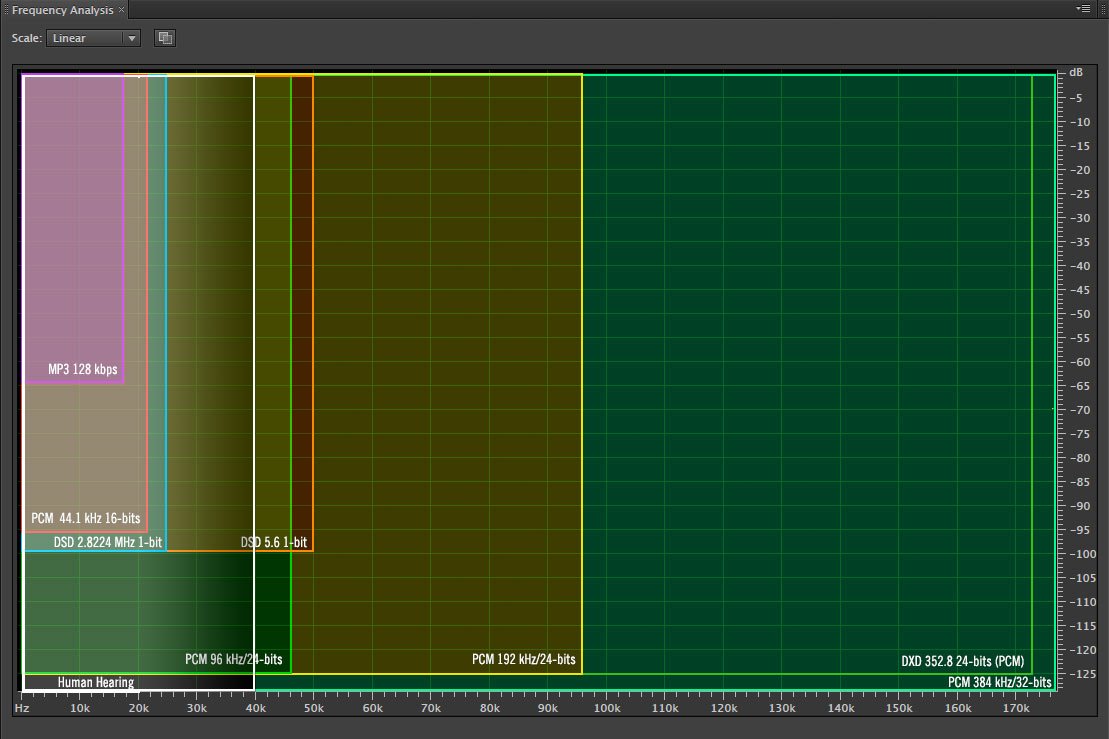
Το HDtracks πουλάει ότι του δίνουν. Έχει αρκετές φορές συλληφθεί να δίνει upsampled (πχ το σκάνδαλο με τα BIS που τα ψηφιοποίησαν από τα SACD ενώ οι αρχικές ηχοργαφήσεις ήταν 16μπιτες).
Πληροφορίες για τα ψηφιοποιημένα
Kind of Blue (ότι είναι με εισαγωγικά είναι από την επετειακή έκδοση των 50 ετών):
"As Sony’s Senior Mastering Engineer, Mark Wilder typically spends his days remixing tracks both classic and modern out of Sony’s Battery Mastering Studios on West 54th in Manhattan (formerly the Record Plant). Wilder has more experience with Kind of Blue than almost any other living person on the planet except Jimmy Cobb. Wilder not only remastered the quintessential Kind of Blue mix from the original 1959 3-track tapes, he discovered a playbackspeed flaw that remained on all Kind of Blue pressings until 1992. At that time, Wilder was revisiting the 3- track safety reels from the original 1959 session for the Sony Mastersound reissue of Kind of Blue, and he noticed the three songs on Side A were a bit sharp in pitch compared to the same tunes on the backup reels. Apparently, the main 3-track deck was turning slower than normal during the March 2 session, and when these tracks were played on a machine running at the proper speed, the slightly faster playback produced the higher pitch. This is why the CDs and LPs made from that reel were sharp. Wilder surmised that the main 3-track had received some maintenance by the time of the April 22 session, and therefore the pieces on Side B were tracked at the standard speed. Realizing that the backup reels had never been played, Wilder decided to use them to remaster Kind of Blue for Columbia’s 1992 Mastersound SBM Gold CD release, thus ensuring both “sides” of the classic album were playing at their proper pitches.
“For the 1992 Mastersound disc where we did the speed correction, I used a Studer 807 3-track and a Neve 8108 console to mix direct to a customized Sony PCM 3402 DASH reelto- reel digital 2-track during that period of time when Sony had its proprietary 20-bit converter,” explains Wilder. “For the final assembly, we used the U-Matic 1630 digital format tape. Basically, you recorded 16 bit/44.1kHz to a 3/4-inch videotape. These were all modified machines, and the connections were SDIF 2 instead of AES. For its time, it was great. Editing was very linear. Unlike a workstation, it was hard to bounce around in time— you pretty much had to assemble the master from start to end.
“In 1997, when we wanted to address Kind of Blue again, I had a GML custom line mixer, and a basically pristine, all-tube Presto 3-track— possibly the R-II [1956] or Model 825 [1957]—which had a unique sound. The GML console was a true step up—it was by far more transparent than the Neve. I did a flat transfer—no EQ or compression—from the Presto and GML to an analog Ampex ATR- 102 with Dolby SR running at 15ips. Printing to analog allowed me to move those original mixes into the future for any technology change that may come along, and these are now the reference standard mixes of Kind of Blue.
“We wanted the 50th Anniversary reissue to be special in some way, so I went with a different tape machine—the Studer A80—and, instead of using the newer Dolby SR 363 units, I went with some standalone SR cards that fit into the old Dolby 360 racks. We used Grado cables to connect everything, and, keeping in mind that we wanted a different interpretation of the original tape, I ran it through an EAR 825 Mastering EQ completely flat. I just wanted to get that Tim de Paravicini [a renowned high-end analog engineer who designed the EAR 825] sound without fiddling with the tonal balance—which I didn’t want to change. If you compare the 50th Anniversary CD with the 1997 release, you’ll find the 50th Anniversary disc a little warmer, and more inviting. It’s not that the ’97 version is abrasive—it’s simply 11 years later. I am at a different place as a listener, and as an engineer, and my interpretation was different then than now.”
Still, retaining the original audio character of what Wilder considers “one of the best recordings Fred Plaut ever did” was a paramount goal. He also wanted to scrupulously document the sounds of the vintage tools likely used to craft Kind of Blue at 30th Street Studio in 1959—a custom Columbia console, Neumann M49 mics, Telefunken or custom-made mic preamps, Ampex 300 or 350 tape machines, Scotch 190 tape, and Altec Lansing Voice of the Theater monitors.
“You have three horns and a rhythm section together in a huge room, and Fred Plaut—the original engineer—placed the mics with a sense of where he wanted the performers to be in the speakers,” says Wilder. “The left, center, and right balance was done before it hit the 3- track tape. It’s mostly a simple, static, ‛all faders up’ mix—even though Fred was doing what was known as a live mix. He was aware of the solos, where the heads were, and who was playing what—turning the mic preamps up or down as needed. A perfect example is “Freddie Freeloader,” where Fred is a little late on John Coltrane’s entrance. The saxophone sounds very echoey, and then, all of a sudden, he’s there. Fred was a little slow on the fader.”
Mark Wilder has publicy stated that no new digital transfer were done by him from the masters (apart from the 50th) after 97. The tapes were only given out once to Bernie Grundman for the Classic Records album.
The Japanese SACD hybrids were supposedly (not proven) mastered in 2006 possibly by someone in Japan or one of the other two engineers listed on the 97 disc. No one is sure.