The primary technical reasons JPLAY is highly regarded for its sonic performance include:
1. Drastic Reduction of Network Traffic and "Polling" Noise
In a typical UPnP setup, the control app continuously communicates back and forth with the network streamer to update the time-elapsed bar, fetch track info, and verify connectivity. This constant "pinging" forces the network card and processor inside your streamer to work harder, generating subtle High-Frequency Electromagnetic Interference (EMI) and Radio Frequency Interference (RFI).
* **The JPLAY Solution:** JPLAY introduces an adjustable feature called **"Update Time"** (polling rate), which can be extended up to 12,000 seconds.
* By maximizing this setting, JPLAY reduces the network traffic between the iPad/iPhone and the streaming endpoint by up to 90%.
* The streamer’s network card drops into a quiet state, drastically lowering processing noise and power fluctuations, which results in a cleaner, more stable environment for the DAC clock and analog stages.
2. Complete Local Indexing (Zero On-the-Fly Queries)
Many standard UPnP apps (like mConnect or BubbleUPnP) dynamically query the media server for metadata, artwork, and album structures as you navigate.
* JPLAY builds and caches its database and search index **entirely local to the iOS device**.
* Because the app doesn’t have to hammer your local network or server to fetch biographies, lyrics, or related-artist metadata while music is playing, the entire local area network (LAN) remains sonically quiet.
3. Highly Optimized, Native iOS Code
JPLAY is written natively for iOS/iPadOS rather than relying on bloated cross-platform frameworks or web-view wrappers.
* Native code executes efficiently, allowing the app to handle massive libraries seamlessly without causing spikes in Wi-Fi transmission power from the iPad.
* Less power used by the transmitting device translates to fewer erratic RF packets bouncing around your listening room and hifi rack.
4. Smart Focus on High-Quality Streams
JPLAY integrates local UPnP libraries exclusively with **Qobuz and Tidal**, bypassing lower-quality platforms. By focusing development strictly on bit-perfect streams, the software handles high-resolution FLAC and MQA/Tidal Max paths efficiently, ensuring data packets are cleanly packaged and delivered to the renderer according to strict UPnP AV standards.
### The Sonic Result: What Audiophiles Hear
When network noise and processor overhead are minimized at the streamer endpoint, the hardware functions closer to its theoretical ideal. Users migrating to JPLAY from standard control points frequently report:
* A more **holographic and expansive soundstage**.
* **Sharper transients** and cleaner timing cues (reduced jitter effects from power supply modulation).
* **Blacker backgrounds**, meaning low-level detail, instrument decay, and subtle micro-dynamics become much easier to discern.
While JPLAY behaves technically as a "remote," its hyper-passive operation during playback makes it one of the few control apps capable of audibly lowering the noise floor of a high-end UPnP system.


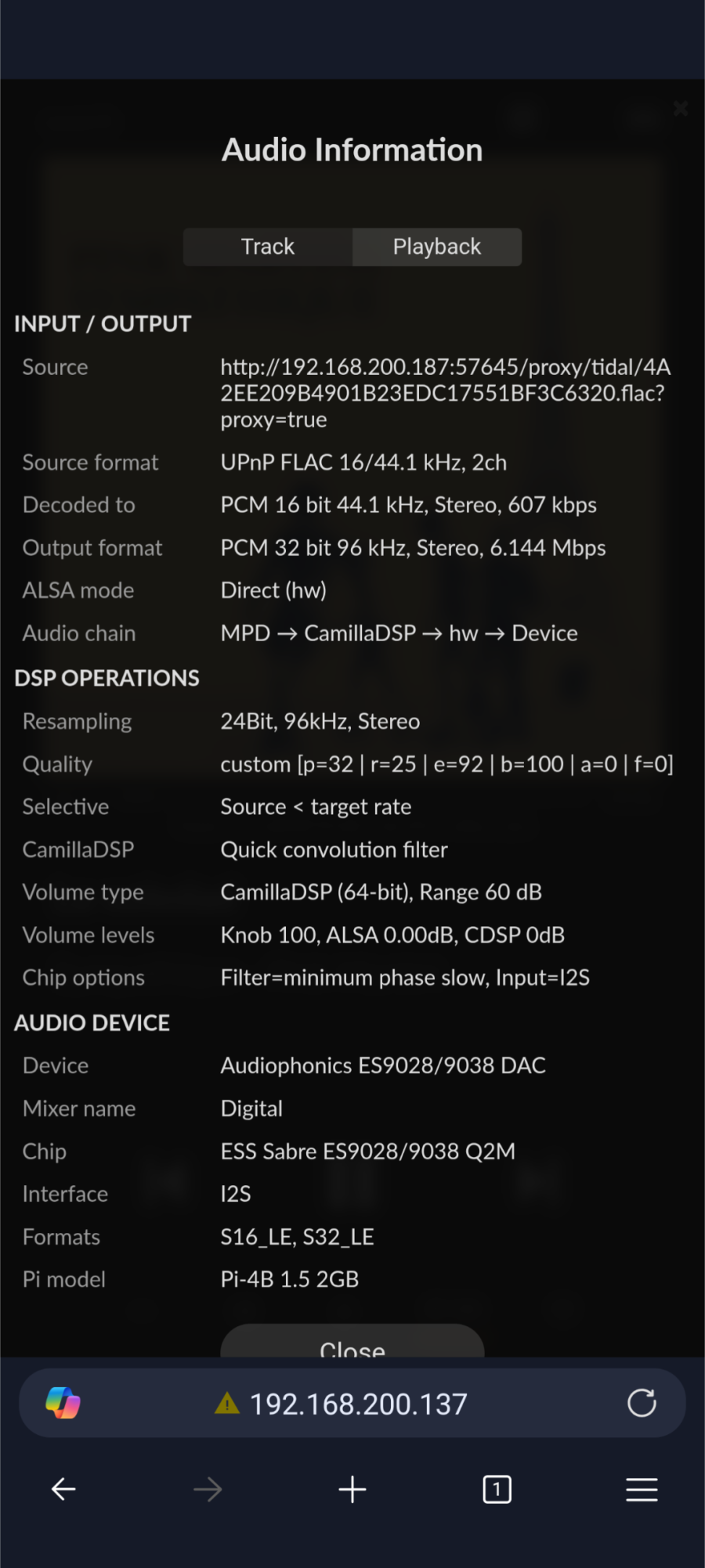
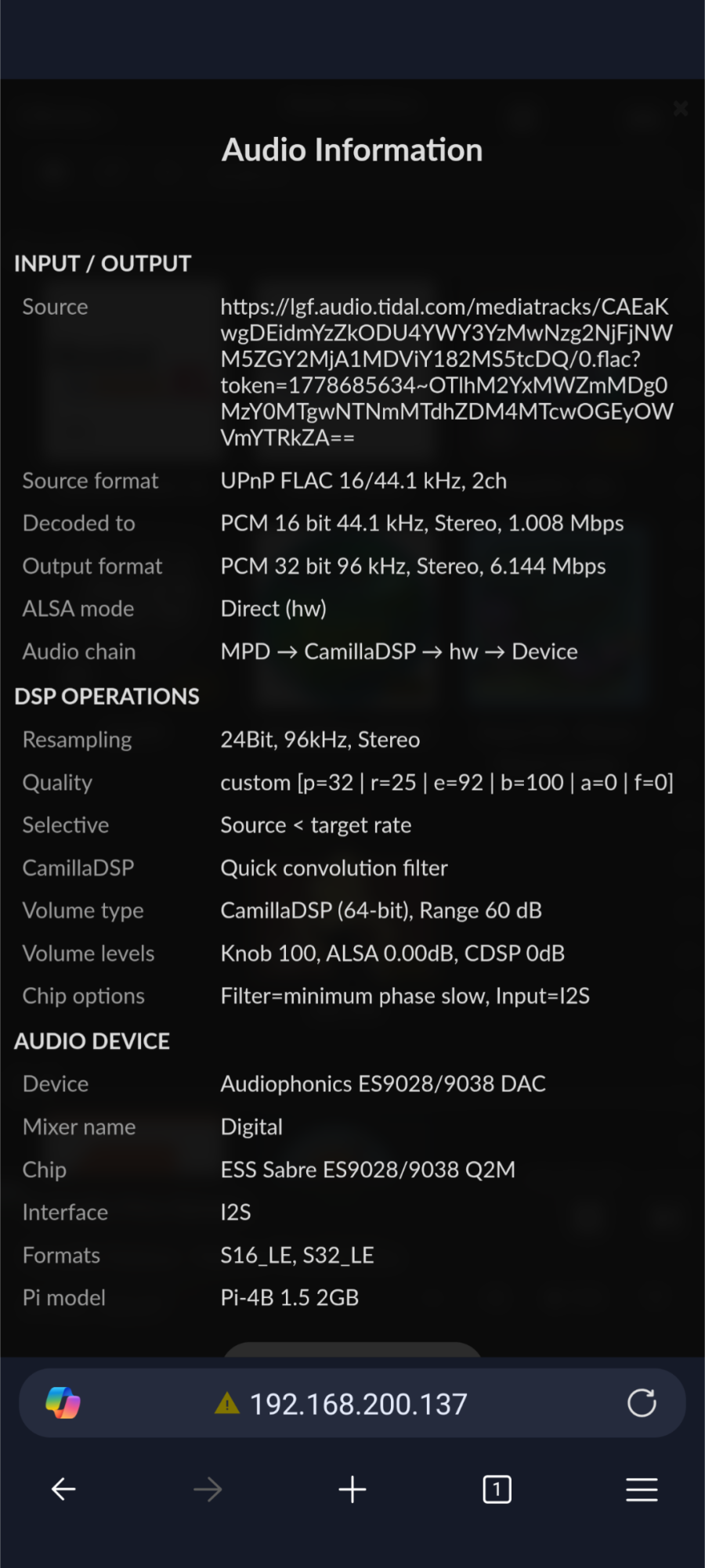


 δεν πιστεύω
 Και θα σου πω γιατί:
 το stream
 οι διαφορές
