Ποιότητα cd vs streaming vs HI-Res audio vs Βινύλιο

Και που να το κάνω; Στο δικό μου και μετά να μην ξεκινάει; 😂


True story
- Έλα ρε, έχουν βγάλει update. Κάνε το αλλά μετά μην κάνεις enable το ram system να φορτώνει με το boot.
- Αφού έχω κάνει και κάνει κανονικά boot!
- Ρε συ, το έχουν γράψει στα bugs και ότι θα το φτιάξουν!
- Αφού εγώ το έχω κλείσει και το έχω ανοίξει τόσες φορές.
(ενεργοποιώ το ram system, reboot δεν έκανε ξανά ποτέ).
- Να κοίτα! Και σε εσένα το κάνει! Backup είχες ε;
Ακριβώς έτσι πριν το καταραμένο update σου με φορτωμένο το ram system στο boot έπαιζα κανονικά, ακολουθώ τη συμβουλή σου και τέζα το σύστημα στο boot. Δεν πειράζει έχω την backup κάρτα μου λέω, όμως ο γκαντέμης την έβαλα καταλάθος σε drone για κάτι λήψεις και πάει. Τωρα το αφήνω αναμένο πάντα και πριν πάω για ύπνο κάθε βράδυ που βλέπω τα φωτάκια του σε βρίζω.
 
Αν σου πω ότι κατάλαβα τελικά γιατί ακούγατε (σε σένα) boom-boom θα σου πω ψέματα
qobuz problems created by lufs
Yes — issues with Qobuz volume and LUFS-related loudness are a real thing that many listeners talk about, and they stem from how (or whether) Qobuz handles loudness normalization compared with other streaming services.
What LUFS and Loudness Normalization Mean

LUFS (Loudness Units relative to Full Scale) is a standard measurement of perceived loudness used by streaming services so that tracks play back at similar perceived volume levels (e.g., −14 LUFS on Spotify) across different songs and albums.

Most streaming services normalize audio to a target LUFS level during playback so that:

Quiet tracks get boosted

Loud tracks get turned down
This gives a more consistent listening experience.

📌 What Qobuz Does Differently

Unlike many services (Spotify, Apple Music, Tidal, etc.), Qobuz traditionally has no consistent loudness normalization — it streams files at their original mastered level. There’s no enforced LUFS target that adjusts playback volume.

This has a few consequences:

❗ 1. Big Volume Swings Between Tracks

Songs mastered very loud or very soft won’t be level-matched on Qobuz. If you switch tracks or albums, you may experience noticeable differences in volume. Users frequently report this frustration, especially in random playlists.

“Qobuz does not have volume normalization … Loudness variations can be huge between recordings.”

❗ 2. Perceived Loudness Can Be Very Different

Some people find Qobuz louder or quieter than other services simply because it doesn’t compress loudness to a common LUFS level. A track mastered hot could sound louder than a quieter master from another service.

This also means tracks don’t feel “consistent” in loudness — quieter masters stay quiet, louder masters stay loud.

❗ 3. Lack of Volume Normalization Features

Many users have asked for replay gain / normalization settings in Qobuz apps — to this point it’s either:

Not implemented in many official apps

Only possible via third-party clients (Roon, USB Audio Player Pro, BubbleUPnP, etc.)

So even if you want consistent loudness, Qobuz doesn’t natively provide it across all platforms.
 
Και θα παρακαλέσω την κοινότητα να μην κράζει τόσο εύκολα, ναι το boom boom χιούμορ μου ήταν λίγο έντονο και κάπως παιδικό, αβάσιμο όμως???
 
qobuz problems created by lufs
Yes — issues with Qobuz volume and LUFS-related loudness are a real thing that many listeners talk about, and they stem from how (or whether) Qobuz handles loudness normalization compared with other streaming services.
What LUFS and Loudness Normalization Mean

LUFS (Loudness Units relative to Full Scale) is a standard measurement of perceived loudness used by streaming services so that tracks play back at similar perceived volume levels (e.g., −14 LUFS on Spotify) across different songs and albums.

Most streaming services normalize audio to a target LUFS level during playback so that:

Quiet tracks get boosted

Loud tracks get turned down
This gives a more consistent listening experience.

📌 What Qobuz Does Differently

Unlike many services (Spotify, Apple Music, Tidal, etc.), Qobuz traditionally has no consistent loudness normalization — it streams files at their original mastered level. There’s no enforced LUFS target that adjusts playback volume.

This has a few consequences:

❗ 1. Big Volume Swings Between Tracks

Songs mastered very loud or very soft won’t be level-matched on Qobuz. If you switch tracks or albums, you may experience noticeable differences in volume. Users frequently report this frustration, especially in random playlists.

“Qobuz does not have volume normalization … Loudness variations can be huge between recordings.”

❗ 2. Perceived Loudness Can Be Very Different

Some people find Qobuz louder or quieter than other services simply because it doesn’t compress loudness to a common LUFS level. A track mastered hot could sound louder than a quieter master from another service.

This also means tracks don’t feel “consistent” in loudness — quieter masters stay quiet, louder masters stay loud.

❗ 3. Lack of Volume Normalization Features

Many users have asked for replay gain / normalization settings in Qobuz apps — to this point it’s either:

Not implemented in many official apps

Only possible via third-party clients (Roon, USB Audio Player Pro, BubbleUPnP, etc.)

So even if you want consistent loudness, Qobuz doesn’t natively provide it across all platforms.

Με το boom boom τι σχέση έχει;
 
qobuz problems created by lufs
Yes — issues with Qobuz volume and LUFS-related loudness are a real thing that many listeners talk about, and they stem from how (or whether) Qobuz handles loudness normalization compared with other streaming services.
What LUFS and Loudness Normalization Mean

LUFS (Loudness Units relative to Full Scale) is a standard measurement of perceived loudness used by streaming services so that tracks play back at similar perceived volume levels (e.g., −14 LUFS on Spotify) across different songs and albums.

Most streaming services normalize audio to a target LUFS level during playback so that:

Quiet tracks get boosted

Loud tracks get turned down
This gives a more consistent listening experience.

📌 What Qobuz Does Differently

Unlike many services (Spotify, Apple Music, Tidal, etc.), Qobuz traditionally has no consistent loudness normalization — it streams files at their original mastered level. There’s no enforced LUFS target that adjusts playback volume.

This has a few consequences:

❗ 1. Big Volume Swings Between Tracks

Songs mastered very loud or very soft won’t be level-matched on Qobuz. If you switch tracks or albums, you may experience noticeable differences in volume. Users frequently report this frustration, especially in random playlists.

“Qobuz does not have volume normalization … Loudness variations can be huge between recordings.”

❗ 2. Perceived Loudness Can Be Very Different

Some people find Qobuz louder or quieter than other services simply because it doesn’t compress loudness to a common LUFS level. A track mastered hot could sound louder than a quieter master from another service.

This also means tracks don’t feel “consistent” in loudness — quieter masters stay quiet, louder masters stay loud.

❗ 3. Lack of Volume Normalization Features

Many users have asked for replay gain / normalization settings in Qobuz apps — to this point it’s either:

Not implemented in many official apps

Only possible via third-party clients (Roon, USB Audio Player Pro, BubbleUPnP, etc.)

So even if you want consistent loudness, Qobuz doesn’t natively provide it across all platforms.

Δεν έχουν σχέση τα παραπάνω με το boom boom. Έχουν σχέση με δυναμική περιοχή και μέση στάθμη έντασης.

Αυτά που λέει το παραπάνω είναι αυτό που ξέρουμε: ότι το Qobuz δεν κάνει καμία επεξεργασία στον ήχο, παίζει απλά ότι του δίνει η δισκογραφική.
 
Το παραπάνω εξηγεί αρχικά τη διαφορά του qobuz απο τα άλλα. Επίσης γραφει για πολλά παράπονα απο χρήστες. Όλα τα άλλα λοιπόν λειτουργούν με επεξεργασία στο original, αυτο όχι άρα έχουμε boom σε κάποιες εγγραφές που τα άλλα απλα θα τις διορθώσουν. Πως δεν έχει σχέση λοιπον με το boom
 
Last edited:
Αυτό που κάνουν τα άλλα δεν είναι διόρθωση, είναι ισοπέδωση. Δεν το θέλουμε αυτό σε καμία περίπτωση στο υλικό μας.

Τα παράπονα από χρήστες έρχονται από αυτούς που ακούν στο αμάξι ή από ψείρες στο μετρό και βαριούνται να ανεβάζουν και να κατεβάζουν την ένταση, ανάλογα με την εγγραφή του κομματιού. Δεν αφορούν εμάς.
 
Όταν μιλάμε για πακέτα ethernet η διαδρομή δεν παίζει κανέναν ρόλο. Μόνο το τι γίνεται μέσα στο σπίτι μας παίζει ρόλο.

Επίσης, αν έχετε προβλήματα με το internet γενικότερα στην περιοχή σας, η προσθήκη VPN δεν θα βοηθήσει καθόλου.
Ίσα ίσα, είναι ένα ακόμα layer που αν έχει προβλήματα μπορεί να φέρει επιπλοκές.

Πάντως, αν έχετε θέμα με το internet, το Qobuz θα κάνει διακοπές στην αναπαραγωγή. Δεν θα αλλάξει κάτι άλλο.


Αν σου πω ότι κατάλαβα τελικά γιατί ακούγατε (σε σένα) boom-boom θα σου πω ψέματα. :P
απο κοντα με καφε ευχαριστω
 
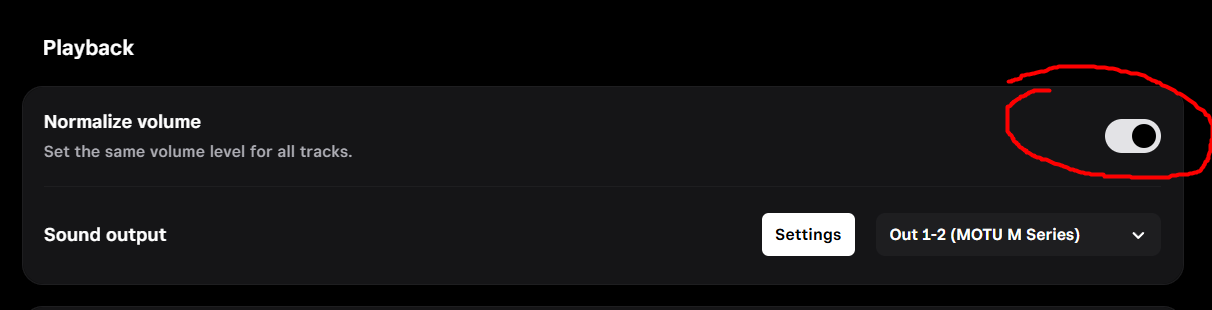
Αυτό που κάνουν τα άλλα ειναι ...δικαίωμα στην επιλογή!

View attachment 265692

Υπάρχουν υπόνοιες ότι ακόμα και το ότι υπάρχει αυτό το δικαίωμα, επηρεάζει τον ήχο (λόγω αρχιτεκτονικής του λογισμικού).

Οπότε είμαι πολύ χαρούμενος που το Qobuz δεν το δίνει καν σαν δυνατότητα. Είμαι σίγουρος ότι δεν "χαλάει" κάτι.
 
Υπάρχουν υπόνοιες ότι ακόμα και το ότι υπάρχει αυτό το δικαίωμα, επηρεάζει τον ήχο (λόγω αρχιτεκτονικής του λογισμικού).

Οπότε είμαι πολύ χαρούμενος που το Qobuz δεν το δίνει καν σαν δυνατότητα. Είμαι σίγουρος ότι δεν "χαλάει" κάτι.
Άμα θέλετε να διυλίσετε τον κώνωπα είναι δικαίωμα σας!

Εγώ στο tidal το έχω ενεργό (το normalize) (εκτός αν σπάνια θέλω να κάνω κάποια δοκιμη/πειραμα)

----------------------------------------------------

Για το tidal:

Κάθε track έχει προϋπολογισμένη ανάλυση έντασης στα metadata του Tidal.
Υπολογίζεται integrated loudness σε LUFS, δεν μετρά peak, μετρά αντιληπτή ένταση (με weighting φίλτρα + gating)
Αυτό γίνεται μία φορά, όχι κατά την αναπαραγωγή.
Το Tidal έχει ορίσει fixed reference level οπότε στη συνέχεια για κάθε track: gain_dB = target_LUFS − track_LUFS
Το Tidal δεν ξαναϋπολογίζει τίποτα σε real time, απλώς εφαρμόζει αυτό το gain, digital, πριν το DAC.
Είναι στατικό για όλο το κομμάτι, δεν υπάρχει: compressor, limiter, dynamic EQ, look-ahead...

-----------------------------------------------------------

Όπως και να 'χει, αν εσάς και η παρουσία του "διακόπτη" σας ανησυχει, follow your heart!
 
Μόλις boom ακουσα boom το Qobuz boom και εγω boom νόμιζα οτι boom boom έκαναν τα ηχεία του φίλου μου του Tzimisce boom αλλά τελικά boom κάνει το υπερφουσκομενο boom μπάσο του player του qobuz boom.
Ευτυχώς μου έδωσε κωδικούς φίλος και το δοκίμασα και δεν το αγόρασα boom.
Φυσικά τα πιτσιρίκια του ξάδερφου μου έβαλαν boom boom μουσική και ξετρελάθηκαν. Για ηλεκτρονική μουσική άνευ οργάνων ειναι καταπληκτικό, εκει που δεν ξέρεις τι βαράει ειναι εντυπωσιακό αν όμως γνωρίζεις άστο καλύτερα.
Όλα αυτα πάντα υποκειμενικά και στο σύστημα μου.
Σήμερα ξεκίνησα συνδρομή στο Qobuz. Παίζω κατευθείαν από την εφαρμογή του WiiM Ultra (μέχρι 24bit/196Κhz από USB output). Μέχρι τώρα δεν μπορώ να επιβεβαιώσω ότι το Qobuz ακούγεται με φουσκωμένο χαμηλό σε σχέση με το Losseless Spotify. Μάλιστα σε ένα γνωστό μου κομμάτι το Fever από την Beyonce, η φωνή της ακούγεται πιο φυσική, πιο καθαρή στο Qobuz (ενώ στο spotify είναι πιο ογκώδης, λίγο πιο αφύσικη σε σχέση με το Qobuz).